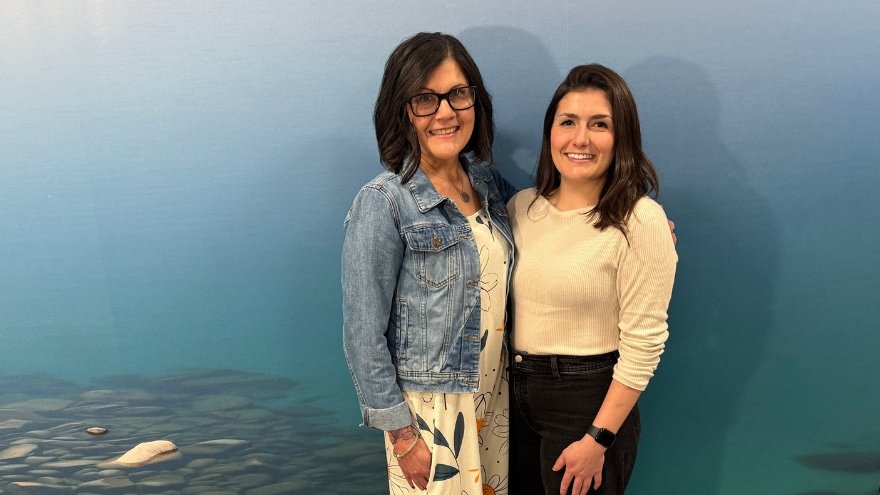
Learn how Toni Ruff, her daughter Emily and their family members turned genetic insights from Renown's Healthy Nevada Project into proactive prevention.
The summer of 2021 was anything but normal for Toni Ruff and her family, and it had little to do with the ongoing COVID-19 pandemic. It went deeper, all the way down to her DNA – and as the Ruffs would soon find out, the entire family’s DNA as well, including Toni's daughter, Emily.
The Day a Test Result Changed Everything
It all started when Toni had a regular appointment with her primary care physician that summer and spent time discussing her family’s health history. Learning that her grandfather experienced multiple strokes in his lifetime, Toni’s provider suspected a link that went beyond just family history.
“My doctor thought there could be a genetic link that might increase my stroke risk,” Toni recalled. “Specifically, he thought familial hypercholesterolemia (FH) was a possibility.”
Affecting 1 in 250 Americans, FH is an inherited disorder that leads to high levels of “bad cholesterol,” which can increase risk of heart disease at a young age. Toni's provider asked the question that would change the course of her life: Why don’t you try genetic testing?
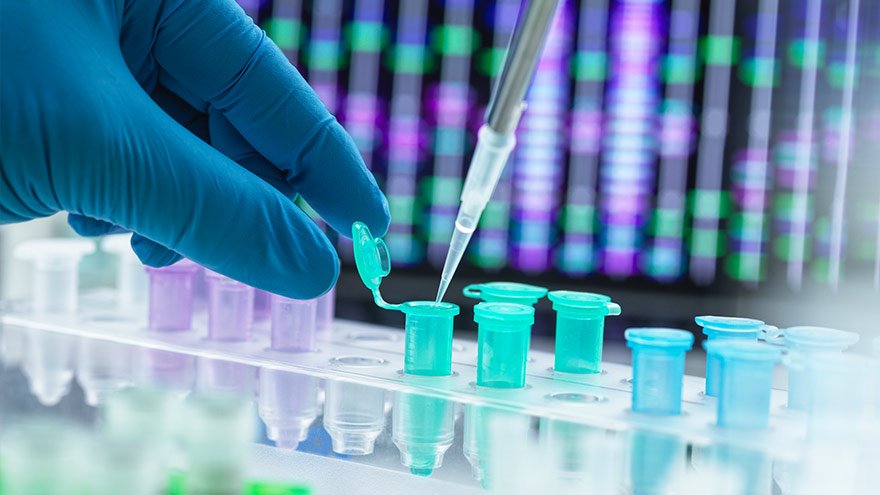
So, she scheduled the test with Renown’s Healthy Nevada Project, a community health research program offering Nevada adults no-cost genetic screening. The Healthy Nevada Project helps patients understand their risks for three conditions that are associated with increased likelihood of developing certain cancers and heart disease, while also supporting new research discoveries for the community.
Little did she know that eight weeks later, when she received her results back from the Healthy Nevada Project, Toni's life – and her family’s lives – would change forever.
“I remember opening the report focused on one thing: whether or not I had FH,” she said. “Instead, I learned something I was completely unprepared for.”
The unexpected result? She tested positive for the BRCA2 genetic mutation, receiving a diagnosis of hereditary breast and ovarian cancer (HBOC) syndrome. HBOC is associated with increased risk of certain cancers – most notably, breast and ovarian cancer for women. 1 in 400 Americans have the inherited condition.
“At first, I didn’t understand because I wasn’t sick, but the weight of that information settled quickly, and I started to grasp what BRCA2 meant for my future,” said Toni.
Toni was then referred to an oncologist. One of the first things he did was review her family history in detail. It turns out the mutation didn’t just affect her; it also affected her loved ones. He strongly recommended that Toni’s close relatives be tested as soon as possible.
So, it was time to talk to the family.
Facing Cancer Risk Head-On, Together
When Toni began speaking to her parents, siblings and children about BRCA2, instead of focusing on fear, she focused on the impact of knowledge.
“I framed it as not bad news, but instead as information and opportunity,” said Toni. “Genetic knowledge gives you options. It allows for increased screening, earlier detection and even preventive care that can change outcomes early.”
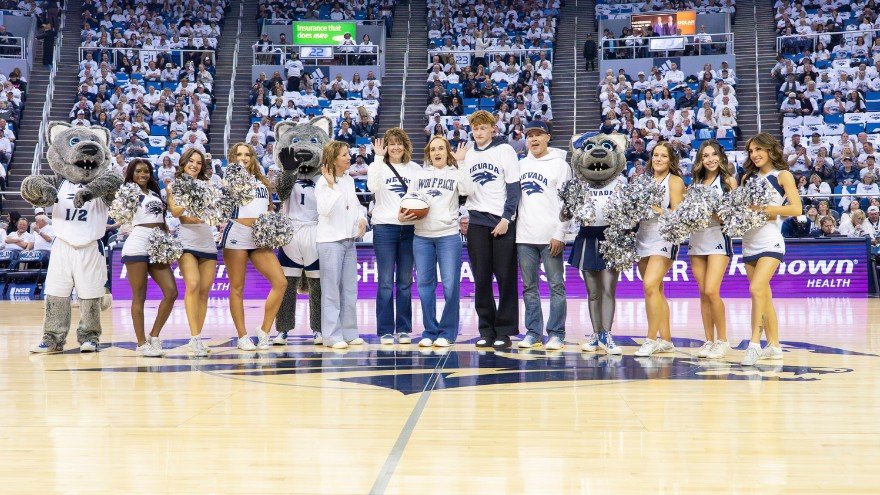
Within weeks, many of Toni’s immediate family members participated in genetic testing with Renown’s Healthy Nevada Project. And when the results started coming back, everyone was stunned. Her mother, father, sisters and daughter all tested positive for BRCA2 gene mutations. On top of it all, Toni later learned that some of her extended family members, including several relatives who were diagnosed with cancers associated with BRCA, carried the BRCA mutation.
“What shocked us most was learning that both of my parents carried different BRCA2 variants: my daughter and I inherited my father’s variant, while my sisters inherited my mother’s variant,” said Toni. “In that moment, it felt overwhelming. This was no longer my diagnosis – it was a shared family reality.”
Enter: Emily Ruff, a then-expectant mother preparing for her new adventure of motherhood in 2022. Emily became key to that family reality Toni touched on.
When Emily decided to participate in the Healthy Nevada Project, she was eight months pregnant with her son and believed that having more information about her health would be incredibly insightful for both her and her unborn child.
When she received her results and learned she was BRCA2 positive, Emily immediately started worrying about what it would mean for her as a new mom. The list of questions kept growing, and she knew she needed a concrete plan, so she jumped into action.
“The fact that I was at a significantly higher risk of having my time with my son cut short due to breast or ovarian cancer was not easy to digest,” said Emily. “I scheduled a consultation with a Genomic Representative to better understand what this meant for me not just medically, but also personally and as a soon-to-be mother.”
During the consultation, Emily learned that best practice for someone with her genetic profile involves intensive, proactive screenings to stay ahead of the game when it comes to her health, even at her young age. She also was armed with the critical knowledge she needed for the future of her son’s health.
“Knowing I’m BRCA2 positive has changed how I think about my family’s future and means I can be mindful of my son’s health history as well,” she mentioned. “When he is old enough to consider genetic testing, I will encourage him to do so, as this information could be important for his long-term health.”
Turning Uncertainty Into Action
Since receiving their results from the Healthy Nevada Project, Toni and Emily have taken proactive steps to reduce their cancer risk. Both women regularly undergo enhanced screenings on a regular basis, including frequent ultrasounds and, in the case of Emily and her young age, alternating mammograms and breast MRIs every six months. Toni made the emotional decision to have a full hysterectomy, including the removal of her ovaries, and a preventive double mastectomy with reconstruction. Emily is considering a similar path down the line.
“These were not easy decisions, but they were informed ones,” said Toni. “Today, my peace of mind is profoundly different from how I felt when I first carried the mutation. Genetic testing doesn’t remove fear, but it replaces uncertainty with clarity. It gives people the chance to act, plan and protect themselves and the people they love.”
“While learning my BRCA2 status was emotionally difficult, I am immensely grateful to know,” Emily added. “Perhaps the hardest part of this journey has been realizing that I may need to decide sooner rather than later if I want to have another child. Knowing that preventive surgery is recommended at a certain point means the choices feel heavier. Even though these are not easy conversations, having this information has given me something invaluable: the ability to plan, prepare and act proactively rather than reactively.”
And that’s exactly the mindset that continues to inspire them both. Rather than thinking of their genetic insights as frightening, Toni and Emily are instead empowered by them, noting that they would much rather have the ability to take control of their health rather than living in the unknown.
The entire experience continues to enable the mother and daughter to live their best, healthiest lives. Both cite this genetic testing opportunity as an instigator for looking more holistically at their health and cancer risks. Emily has even spent time researching how chronic stress, emotional well-being and environmental factors (such as nutrition) intersect with genetics.
Today, Toni and Emily are strong supporters of genetic testing and the Healthy Nevada Project. The two continually advocate for others to take advantage of the same opportunity they did – because as they put it, one simple test can really change everything.
“That’s why programs like Renown’s Healthy Nevada Project are so important,” Toni emphasized. “Prevention matters. Early detection matters. Access matters. And my family, though forever changed by these results, is better prepared to face the future with awareness and intention.”
“While genes are not something we can change, awareness gives us power and the ability to modify our lives to reduce risk,” Emily added. “This knowledge has allowed me the chance to take steps that may ultimately save my life and appreciate every moment.”
Genetic screening changed the Ruff family’s story. What about yours? Join the thousands of Nevadans who have unlocked insights into their inherited health risks, hereditary traits, regional ancestry and more with Renown’s Healthy Nevada Project. Signing up is easy, and all who participate receive their results at no cost to them. Plus, you’ll be contributing greatly to future discovery, as researchers will be able to study how DNA impacts health, what might cause certain diseases and the best treatment options so people like Toni and Emily can live longer, healthier lives. It’s a win-win-win: for you, for us and our community.