Children learn to move in their own way and on their own timeline. Still, you may notice that everyday activities such as sitting, walking, climbing stairs or keeping up during play feel harder for your child. A pediatric physical therapy evaluation can help you understand what is happening and what support may help.
Pediatric physical therapy helps infants, children and teens improve movement, strength, balance, coordination and confidence. A pediatric physical therapist uses developmentally-appropriate activities and play to assess a child's abilities, set achievable goals and help the family support progress at home.
What is pediatric physical therapy?
Pediatric physical therapy is movement-focused care designed for growing bodies. It may support a child who is working toward developmental milestones, managing a condition that affects mobility, or returning to activity after an injury or procedure. Care is tailored to the child's age, abilities, interests and family goals.
Depending on your child's needs, therapy may focus on:
- Reaching early gross motor milestones, including rolling, sitting or walking
- Mastering later developing milestones including jumping, climbing stairs and playing with playground equipment
- Building strength, flexibility and endurance
- Improving balance, coordination and posture
- Practicing movement skills for play, school and sports
- Recovering safely after an injury, surgery or period of limited activity
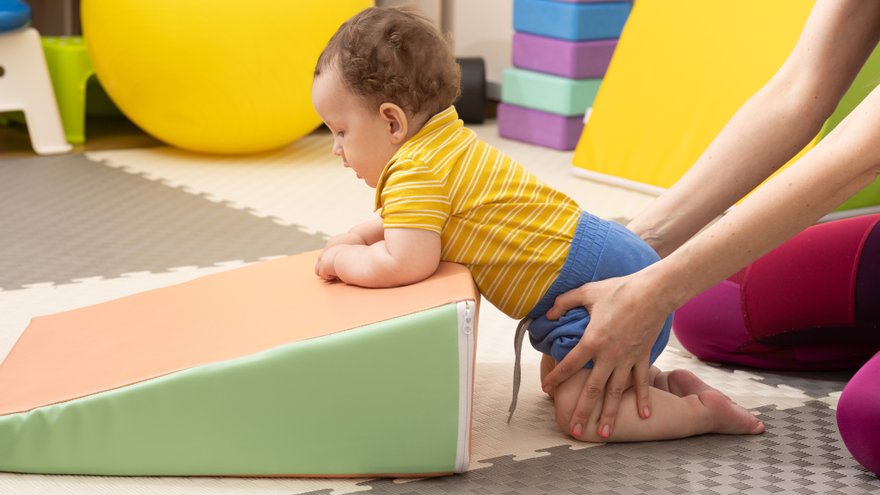
A visit may include games, guided movement, climbing, reaching or an obstacle course. These activities give the therapist useful information while helping the child feel engaged and successful.
What signs point to a need for a physical therapy evaluation?
One sign does not necessarily mean something is wrong. Consider talking with your child's pediatrician if you notice:
- Difficulty reaching movement milestones such as sitting, crawling or walking
- Frequent falls or trouble with balance and coordination
- Persistent toe walking or an unusual walking pattern
- Difficulty running, jumping, climbing stairs or keeping up during play
- Pain, stiffness or fatigue with movement
- A noticeable difference in strength or movement between sides of the body
- A need for support after an injury, surgery or sports-related condition
Your pediatrician can help determine whether an evaluation is appropriate. Seek prompt medical care for a sudden loss of movement, severe pain or a new injury that prevents your child from using an arm or leg.
What can pediatric physical therapy help with?
Children may be referred for many different reasons. The care plan depends on how movement affects the child, not only on a diagnosis.
Development and milestone concerns
Therapy can help children practice foundational movement skills and find easier ways to participate in everyday routines.
Neurologic and neuromuscular conditions
For children whose nervous system or muscles affect movement, therapy may support mobility, positioning, strength and independence.
Sports injuries and return to activity
Young athletes may benefit from guided rehabilitation that rebuilds movement skills and supports a gradual return to the activities they enjoy.
Orthopedic and mobility concerns
Therapy may address movement challenges involving bones, joints, muscles, posture or walking patterns.
Congenital and genetic conditions
A therapist can adapt activities and equipment recommendations to support a child's comfort, participation and changing needs.
Why can early support matter?
Children learn movement through repetition and everyday experience. Timely support can give the child and family more opportunities to practice helpful skills. Starting with an evaluation does not commit your family to a set course of treatment; it provides information and next steps.
Depending on your child's needs, support may help them:
- Move more comfortably and efficiently
- Build strength, balance and endurance
- Participate more fully in play, school or sports
- Develop confidence while trying new skills
- Learn strategies that families can use during daily routines
Progress looks different for every child. The therapist and family work together to choose goals that are meaningful, realistic and connected to daily life.
What happens at a pediatric physical therapy evaluation?
The first visit begins with your concerns and goals. The therapist may ask about your child's health history, development, favorite activities and the movements that feel difficult. The evaluation may look at:
- Strength, flexibility and range of motion
- Balance and coordination
- Posture, walking and other movement patterns
- Age-appropriate gross motor skills
- Endurance and participation in daily activities
Afterward, the therapist will explain what they observed and discuss recommendations with you. If therapy is recommended, the plan may include clinic visits, home activities and ways to track progress. Bring questions and share what matters most to your family. Care works best as a partnership.
How does Renown support children and families?
The pediatric therapy gym at Renown Physical Therapy & Rehabilitation – E 2nd was created for children. The dedicated space gives pediatric patients a place to focus and move in an environment designed around their needs. Pediatric physical therapy is available, with pediatric occupational therapy planned as the program develops. The goal is to make care more child-focused while helping families access rehabilitation services close to home.
Frequently asked questions about pediatric physical therapy
At what age can a child start physical therapy?
Children can be evaluated from infancy through adolescence. The right time depends on the concern, how it affects daily life and guidance from the child's care team.
Do we need a referral for pediatric physical therapy?
Referral requirements can depend on the service, your insurance plan and your child's care needs. Check with your pediatrician, insurance provider or the therapy clinic before scheduling.
How long does pediatric physical therapy last?
There is no standard timeline. The therapist will recommend a plan based on your child's needs, goals and response to care, then adjust it as your child progresses.
Does insurance cover pediatric physical therapy?
Coverage varies by plan. Ask your insurance provider about benefits, visit limits, authorization requirements and expected costs.
How are physical therapy and occupational therapy different?
Physical therapy often focuses on movement, strength, balance and mobility. Occupational therapy often focuses on participation in daily activities, including play, dressing, eating and fine motor tasks. Depending on the child's needs, the two disciplines may work together.
Start the conversation about your child's therapy choices today
If you have questions about your child's movement, balance, strength or developmental milestones, start with your pediatrician. Describe what you have noticed, when it began and how it affects your child's everyday activities.
An evaluation can help your family better understand your child's movement and decide what support, if any, may be helpful. The goal is not perfection; it is helping your child participate, build confidence and keep moving forward.
To learn more about therapy options for your child, visit Renown Pediatric Physical & Speech Therapy or call 775-982-5001 to ask about availability.