August is Children’s Eye Health and Safety Month, an important time to learn more about myopia, or nearsightedness. Myopia is a condition that affects millions of children around the world. Researchers estimate that about one in three teenagers are currently affected, and 40% of the world’s children could have myopia by the year 2050.
Berna Amet, a second-year medical student at the University of Nevada, Reno School of Medicine, recently interviewed Dr. Mitchell Strominger, a board-certified neuro-ophthalmologist and pediatric ophthalmologist at Renown, about what myopia is and whether it can be treated or its progression slowed.
What is Myopia?
Myopia is a medical condition in which a person can see objects up close clearly, but objects in the distance appear blurry. For example, a person can read fine print without glasses but can’t read a far-off street sign.
Myopia occurs when the eyeball grows slightly too long from front to back, causing light to focus in front of the retina rather than directly on it. This is why myopia often develops during childhood; the eye grows along with the rest of the child, and either grows too fast or becomes slightly too long.
Causes and associated risks
The exact cause of myopia is unknown, although genetics may play a role. A child with one or both parents with a history of myopia will likely have an increased chance of developing the condition themselves.
“If you have a parent who's myopic, the chance of your child becoming myopic is pretty significant,” says Dr. Strominger.
While genetics play a factor, they do not entirely explain why myopia is becoming more common in children. Studies have demonstrated a strong link between the rise in myopia and lifestyle and environmental factors such as decreased time spent outdoors.
“Spending time outside in some sunlight has been shown to prevent some of the progression of myopia,” said Dr. Strominger. “I can tell you the number of kids that I see here in Reno who have progression of myopia is less than when I was in practice in New England, and I think it has to do with the fact that it's sunny here,” Dr. Strominger added.
Some parents wonder whether increased time spent looking at near objects, like mobile screens and homework, can cause a child’s myopia to develop or worsen. While research on this topic is still being conducted, Dr. Strominger recommends parents refer to the American Academy of Pediatrics guidelines on screen time for the most up-to-date information.
Treatment and Prevention
Various interventions have emerged over the years to slow or stop the progression of myopia in children.
Eyedrops
The most studied and established treatment for slowing myopia is a prescription eye drop called atropine. Atropine works to slow the process that causes the eye to become too long. Because the drops dilate the pupil, side effects may include light sensitivity and some blurred near vision, particularly in children with lighter eyes.
“Atropine is given every night before bed, typically until the child is around 18 years old. However, the drops must be taken every day – and if a patient stops taking them, the myopia progression can then restart,” Dr. Strominger says.
Eyeglasses
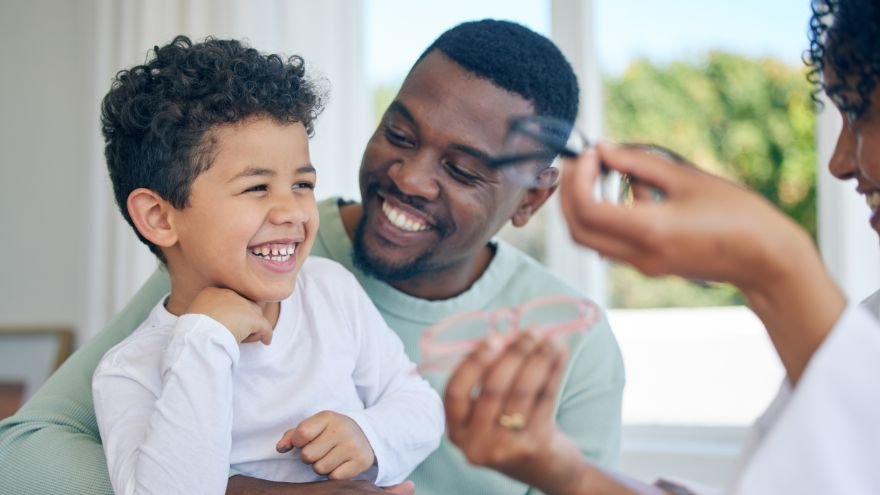
If daily eye drops don’t sound practical, there are now FDA-approved eyeglasses that have also been shown to be effective in slowing the progression of myopia. These glasses have specialized lenses with a center designed for clear and sharp vision, with edges containing concentric rings that defocus peripheral vision, a concept known as peripheral defocusing. This changes the way light enters the eyes and decreases the elongation process that causes myopia. These lenses have been shown to slow myopia progression by 67%.
Similarly, there are also FDA-approved contact lenses that utilize peripheral defocusing. This is another proven intervention to reduce myopia progression in children and is great for older children who are looking for an alternative to wearing glasses.
Outdoor Time
Studies show that more time spent outside can prevent myopia and slow its progression. Many theories exist about why this happens, but the main idea is that the strength and makeup of sunlight play a role in a process that helps reduce the growth of the eye. This may help prevent or slow down the progression of myopia.
Signs to Watch For
Having myopia, especially with a strong prescription, can lead to more serious eye complications later, including retinal detachment, cataracts and glaucoma. It’s important to work with an eye care provider to take steps that can help.
There are many ways parents can be proactive in preventing and treating myopia. Making efforts to spend more time outdoors in natural sunlight is an incredibly effective strategy to mitigate nearsightedness. Be on the lookout for typical signs of nearsightedness in children, including squinting, holding objects closer and moving towards things like the TV or the board at school. Finally, regular eye exams with an eye care provider, especially when there is a family history of myopia, can help parents catch myopia early on and implement appropriate interventions.